This Is Why Democrats Wont Oppose the Socialist Takeover of Their Party
3 minute readPublished: Wednesday, June 24, 2026 at 9:00 pm
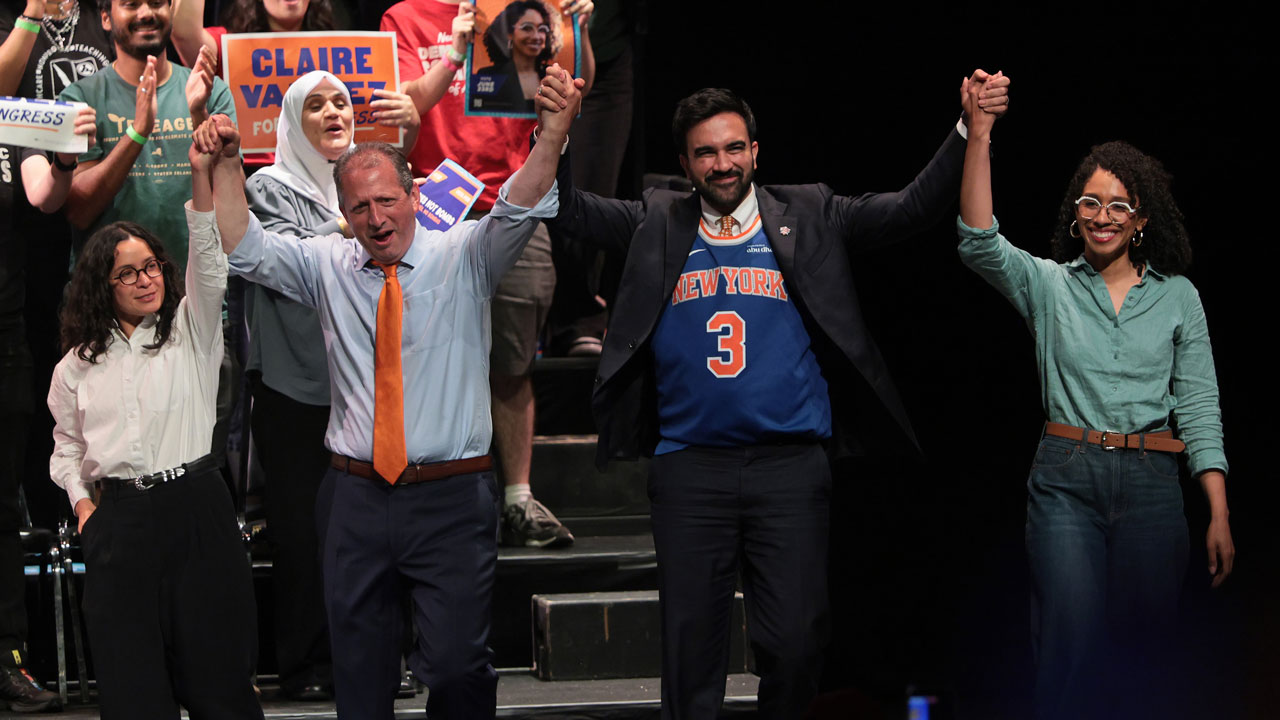
The Democratic Party and the Democratic Socialists of America appear to be increasingly aligned, with recent primary election results in New York City highlighting this trend. Several candidates backed by openly socialist Mayor Zohran Mamdani secured victories against incumbent Democrats in House primary elections. In some contests, the leading candidates were both positioned far to the left, with voters reportedly favoring the candidate most vehemently opposed to Israel, a stance now described as a significant litmus test in Democratic primary races.
One victorious candidate, Darializa Avila Chevalier, is noted for her support of full prison abolition, a position she reportedly advocates fervently despite an inability to defend it coherently. She is also reported to oppose the deportation of undocumented immigrants, including those convicted of serious crimes. Furthermore, she is credited with founding a college campus organization described as primarily focused on anti-Israel sentiment and advocating for the eradication of Western civilization.
While acknowledging the potential for overgeneralization from local election results, the text suggests these outcomes are not isolated incidents. It posits that socialists have been achieving electoral success in various urban centers with minimal opposition from the Democratic Party establishment. These victories are presented not as anomalies but as indicators of the evolving preferences of a growing segment of the electorate.
For years, there have been indications that a younger, emerging faction within the Democratic base has been receptive to socialist ideas. This sentiment has reportedly reached a critical point, as the party's establishment can no longer credibly claim that its more moderate image is yielding the desired electoral success. The narrative suggests a shift where young socialists are embracing a more revolutionary approach, likened to a chemical reaction where incremental changes eventually lead to a dramatic transformation.
Democratic Party leaders are described as evading direct discussion of the socialist influence, often characterizing it as a localized phenomenon. House Minority Leader Hakeem Jefferies is cited as being in denial about socialists taking over his party, despite his own candidates being largely unsuccessful in the New York primaries. When questioned about the implications of these results for future elections, he reportedly downplayed their significance.
Instead of drawing a clear distinction from the socialist left, establishment Democrats are reportedly reframing these developments as a means of injecting energy into politics. The text suggests a strategy of downplaying the radicalism of these figures while ultimately seeking to benefit from the enthusiasm generated by the rising socialist movement, a movement they previously denied existed. The current framing is that socialists are now simply part of a broad coalition.
The author contends that regardless of the pronouncements from Democratic Party elites, the public should pay attention. While not every Democratic voter may subscribe to what is described as fanatical anti-Western leftism, the lack of significant resistance to socialist influence in Democratic strongholds is seen as a tacit acknowledgment that the party's most fervent supporters not only tolerate but actively demand various forms of militant socialism. The text asserts that the highly educated activist class, now central to Democratic politics, is no longer concealing its agenda and is actively pursuing power beyond local influence, with aspirations for national impact.
BNN's Perspective:
The recent electoral trends suggest a significant ideological shift within a segment of the Democratic Party, particularly in urban centers. The increasing visibility and success of candidates with socialist platforms raise important questions about the party's future direction and its ability to appeal to a broader electorate. While some may view this as a sign of increased engagement and a desire for bolder policy proposals, others may express concern about the potential for radicalization and its implications for mainstream politics. A moderate approach would likely involve a careful examination of these trends, seeking to understand the underlying voter concerns while also fostering a political environment that encourages constructive dialogue and pragmatic solutions.
Tags: Democratic Party, Democratic Socialists of America, socialist takeover, New York City, Mayor Zohran Mamdani, primary elections, incumbent Democrats, anti-Israel, prison abolition, deportation, Western civilization, national trends, electoral success, moderate veneer, revolutionary energy, radicalism, Hakeem Jefferies, activist class, militant socialism, voter preferences