Scientists Identify an Overlooked Factor Behind Intense Volcanic Eruptions
3 minute readPublished: Tuesday, June 9, 2026 at 2:05 pm
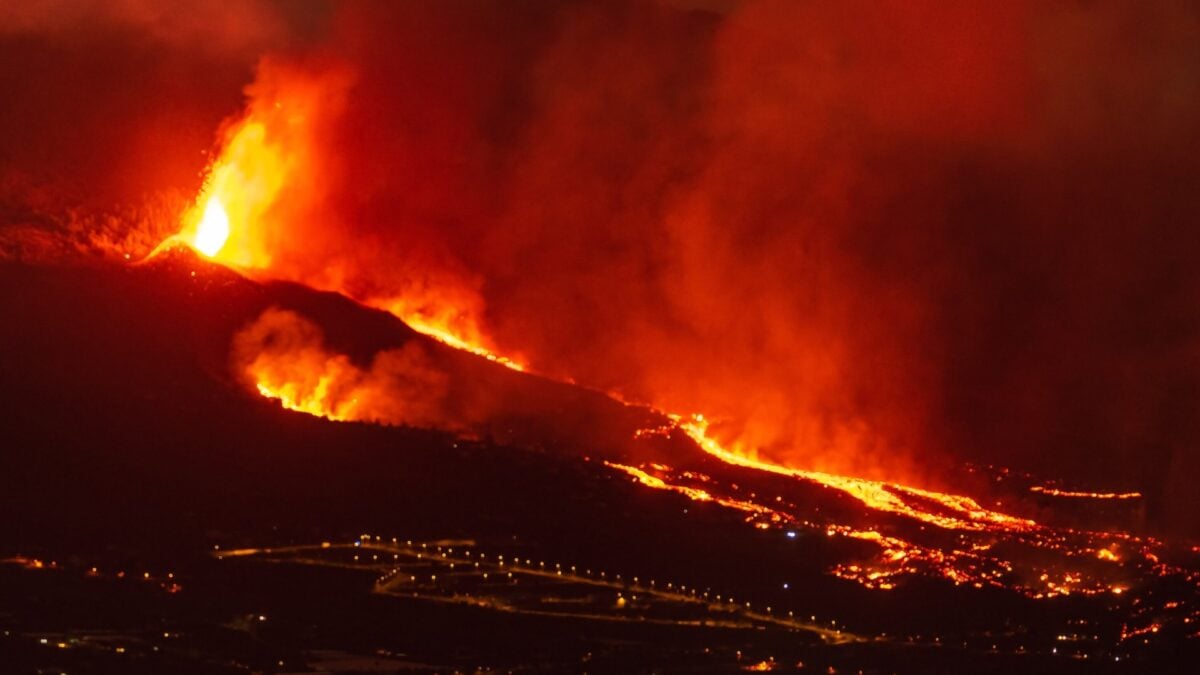
Scientists have identified a previously overlooked factor that could significantly enhance the prediction of intense volcanic eruptions: the degree of superheating in magma. Research stemming from the 2021 Tajogaite volcano eruption on the island of La Palma has provided crucial insights into this phenomenon. The Tajogaite eruption, a historic 85-day event, saw lava rivers rise to an average height of nearly 20 feet and flow at an estimated 984 feet per hour, causing widespread destruction.
In the aftermath of this powerful eruption, Earth science researchers were able to analyze cooled rock samples from the Tajogaite cone. By recreating the volcano's molten magma in a laboratory setting, scientists conducted high-temperature experiments. These experiments revealed that the extent to which magma is superheated before its ascent to the Earth's surface plays a critical role in controlling its viscosity and eruptive style.
Lead author of the study, volcanologist Barbara Bonechi, explained that the dynamics of crystal growth in magmas that experience a surge of superheat just before rising were not fully understood until now. The team's findings suggest that superheated magma exhibits a primary control on its viscosity, preventing the formation of solid crystals that could otherwise impede its flow.
Using tephrite samples from Tajogaite, researchers melted the rock back into magma within a specialized pressure vessel. Advanced X-ray microtomography allowed them to observe the magma's behavior in real-time. This data indicated that a superheated state significantly influenced how the magma interacted with gases, changing pressures, and ultimately, the eruption's intensity. The study highlights that the history of crystal and bubble growth can dramatically dictate how magma erupts.
Experiments showed that magma superheated to 2,309 degrees Fahrenheit took longer to cool, with mineral crystals only beginning to form at 1,963 degrees Fahrenheit. Further increases in superheating, such as to 2,489 degrees Fahrenheit, pushed crystal formation to even lower temperatures.
Coauthor Margherita Polacci expressed hope that this research will be incorporated into future volcanic hazard assessment models, emphasizing the importance of pre-eruptive thermal history and crystallization kinetics in controlling magma ascent and eruptive behavior. The study, published in Nature Communications, also suggests that magma originating from deeper within the Earth, closer to the core, is more likely to be superheated and erupt with greater force. Even minor changes in magma storage conditions can lead to substantial differences in eruptive power.
BNN's Perspective: This research represents a significant step forward in understanding the complex forces that drive powerful volcanic eruptions. By identifying superheating as a key predictive factor, scientists are better equipped to anticipate and potentially mitigate the devastating impacts of such events. The integration of this new understanding into hazard models could offer a more nuanced and accurate approach to volcanic risk assessment, benefiting communities worldwide.
Tags: volcanic eruptions, superheating, magma, viscosity, crystal growth, Tajogaite volcano, La Palma, volcanology, hazard assessment, Nature Communications