Nepals Fragile Dawn
3 minute readPublished: Tuesday, September 30, 2025 at 4:41 pm
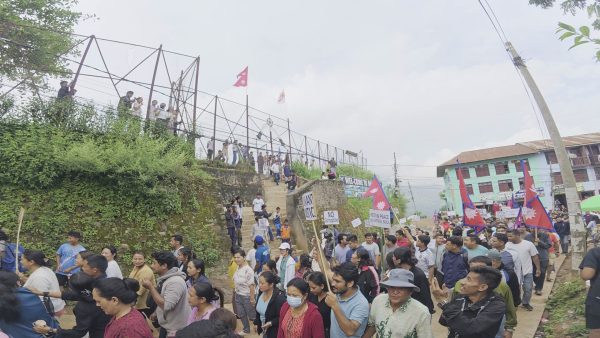
Nepal Faces Uncertain Future After Government Overthrow
Kathmandu, Nepal - Nepal is navigating a period of significant political transition following the recent ouster of the K.P. Sharma Oli government. The Gen Z uprising, fueled by widespread discontent, led to the formation of an interim government headed by former Chief Justice Sushila Karki. While the change has been met with a degree of optimism, the path forward is fraught with challenges.
The primary mandate of the new government is to organize nationwide elections by March 5, 2026. However, securing the participation and endorsement of major political parties, including the Nepali Congress, the Communist Party Nepal-Unified Marxist-Leninist (CPN-UML), and the CPN Maoist Center, is crucial for the legitimacy of the elections. These parties, despite their unpopular leaders, remain key players in Nepali politics. Their reluctance to fully embrace the new regime and calls for a reversal of the parliament's dissolution pose a significant hurdle.
The logistics of holding elections within the next six months also present a formidable task. The Election Commission faces the challenge of updating electoral rolls, including the inclusion of Gen Z members and millions of Nepalis living abroad. Security concerns are also paramount. The Nepal Police, still recovering from the Gen Z revolt, is demoralized and unprepared. The role of the Nepali Army, which facilitated the transition, is also under scrutiny, with questions raised about its actions during the protests.
International involvement adds another layer of complexity. While major international actors like India, China, and the United States have advised the army to work within the constitutional framework, their potential intervention if their interests are threatened remains a concern. Conspiracy theories about foreign influence and the potential for the restoration of the monarchy further complicate the situation.
The Gen Z movement itself is also facing internal divisions. Different factions within the movement have competing agendas, ranging from holding new parliamentary elections to advocating for a directly elected executive head or even the restoration of the monarchy.
BNN's Perspective: The situation in Nepal is undeniably precarious. While the removal of the previous government offers a chance for reform, the lack of consensus among political actors, the logistical hurdles of organizing elections, and the potential for external interference create a volatile environment. The success of the transition hinges on the ability of all stakeholders to prioritize the stability and future of Nepal over their own narrow interests.
Keywords: Nepal, government, elections, Gen Z, political transition, Sushila Karki, Nepali Congress, CPN-UML, CPN Maoist Center, security, army, India, China, United States, monarchy, protests.