NASA Spacecraft Captures Comet Exploding
3 minute readPublished: Tuesday, April 7, 2026 at 11:45 am
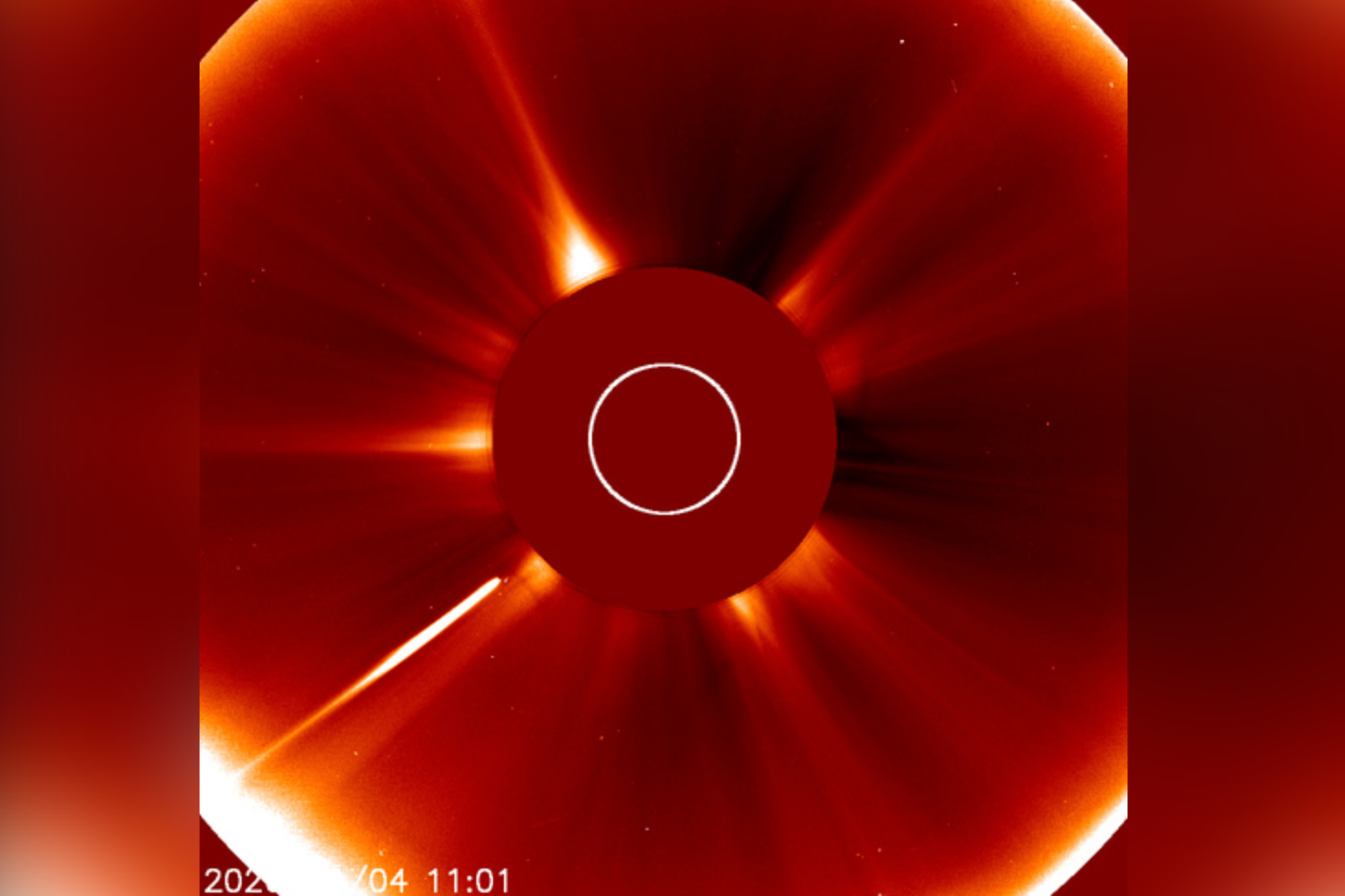
NASA Spacecraft Witnesses Comet's Demise Near the Sun
A recently discovered comet, designated C/2026 A1 and nicknamed MAPS, met a fiery end as it ventured close to the sun. Images captured by a NASA spacecraft revealed the comet's disintegration due to intense thermal pressure. The Solar and Heliospheric Observatory (SOHO), a collaborative project between NASA and the European Space Agency (ESA), observed the event on April 4th.
SOHO utilizes a coronagraph, a specialized instrument that blocks out the sun's direct light, allowing for the observation of the surrounding space. Comet MAPS was seen approaching the sun, traveling to within approximately 99,000 miles of its surface. The comet entered the coronagraph's blind spot intact, but only a cloud of debris emerged on the other side.
The footage also showed a sudden brightening, potentially indicating the comet's nucleus exploding due to thermal stress. Following the explosion, a dust cloud, characterized by narrow bands known as "striae," was observed. This structure is a common feature resulting from the release of material from comets.
Comet MAPS was discovered earlier this year, and experts initially speculated it might become visible in daylight. However, later observations suggested it was smaller than initially estimated, increasing its vulnerability during its close passage to the sun. While some comets brighten dramatically when near the sun, this was not the case for MAPS.
Attention now shifts to Comet PanSTARRS, also known as Comet C/2025 R3. This long-period comet is expected to peak in late April, approximately 46 million miles from the sun. It will make its closest approach to Earth on April 27, when it is expected to be at its brightest. The visibility of Comet PanSTARRS, whether it will be visible only through binoculars or with the naked eye, remains uncertain.
BNN's Perspective: The ongoing observations of comets and the use of advanced technology like SOHO provide valuable insights into the dynamics of our solar system. While the destruction of Comet MAPS is a fascinating event, the potential for Comet PanSTARRS to become visible offers an exciting opportunity for both amateur and professional astronomers. Continued investment in space exploration and international collaborations like SOHO are crucial for expanding our understanding of the cosmos.
Tags: NASA, comet, explosion, sun, SOHO, ESA, thermal pressure, debris, dust cloud, striae, PanSTARRS, C/2025 R3, C/2026 A1, astronomy, space exploration