Its almost tragic: Bubble or not, the AI backlash is validating what one researcher and critic has been saying for years
3 minute readPublished: Sunday, August 24, 2025 at 8:02 am
AI Market Faces Scrutiny as Tech Selloff Sparks Bubble Concerns
A significant tech selloff, wiping $1 trillion from the S&P 500, has amplified concerns that the artificial intelligence boom may be morphing into a "dotcom bubble 2.0." The market's sensitivity to AI developments was underscored by the index's recent dip, driven by the increasing dominance of technology stocks that have largely pivoted to AI. While broader market forces, including Federal Reserve commentary, also play a role, the AI narrative has become a focal point for investor anxiety.
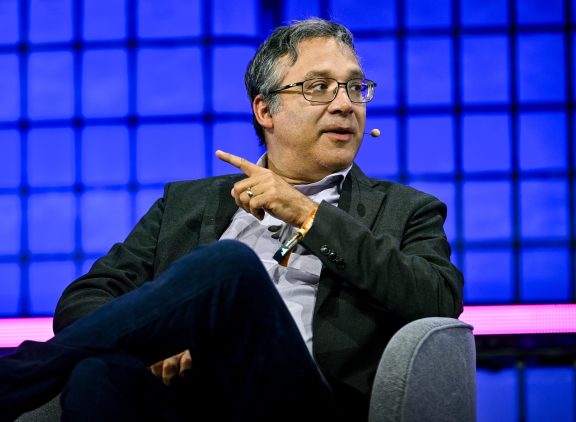
Gary Marcus, a cognitive scientist and AI researcher, has been a vocal critic of the limitations of large language models (LLMs) and the economic viability of the current AI trajectory since 2019. His long-standing warnings about a potential bubble and problematic economics, particularly since 2023, are now resonating with a market experiencing a notable wobble. Marcus attributes this shift in sentiment, in part, to the underwhelming performance of GPT-5, which he argues was oversold as a precursor to artificial general intelligence (AGI). While not a failure, GPT-5 has reportedly fallen short of the "quantum leap" many anticipated, leading to a broader reevaluation of AI's immediate capabilities.
This sentiment echoes Marcus's earlier assertions in 2022 that deep learning was encountering fundamental limitations. He has openly questioned on his platform when the generative AI bubble might deflate, citing crowd psychology and the potential for markets to remain irrational longer than investors can sustain.
The concerns are not isolated. In July, a prominent economist highlighted that the top 10 companies in the S&P 500 are currently more overvalued than during the 1990s IT bubble, pointing to detached forward price-to-earnings ratios and market capitalizations. Additional warning signs include substantial investments in data centers to support projected AI demand, with these investments contributing significantly to GDP growth. Furthermore, a former CEO of a major tech company has publicly expressed uncertainty about the timeline for achieving AGI, a notable shift from previous pronouncements. This evolving discourse suggests a potential "twilight of tech unilateralism" if the AGI bet proves to be a miscalculation.
The summer has seen a mounting AI backlash, with commentary predicting a period of "AI slop" and widespread acknowledgment of AI mishaps. However, some analysts suggest that while short-term pain may be inevitable, a future golden age of AI remains plausible. Historical patterns of technological revolutions indicate that frenzied investment often triggers bubbles and crashes, but ultimately leads to the realization of durable value.
Wall Street institutions, while cautious, are largely refraining from labeling the current situation a bubble. Many foresee significant efficiencies and productivity gains driven by AI, projecting substantial annual value for S&P 500 companies. While acknowledging potential "capex indigestion" from data center buildouts, they maintain that AI adoption is expanding rapidly, with growing monetization from various AI platforms. Some analysts, however, express concern about the shift towards asset-heavy data center investments by tech companies, suggesting this could alter their historically asset-light, high-margin business models and warrant lower market multiples.
BNN's Perspective: The current market volatility surrounding AI is a complex interplay of genuine technological advancement and speculative exuberance. While the potential of AI is undeniable, the recent reassessment of expectations, particularly around large language models, highlights the importance of grounded analysis over hype. The historical parallels to past technological bubbles offer a valuable lens, suggesting that while corrections are likely, the long-term transformative power of AI may still be realized, albeit perhaps on a more measured and sustainable timeline. A balanced approach, acknowledging both the opportunities and the inherent risks, is crucial for navigating this evolving landscape.
Tags: AI, artificial intelligence, tech selloff, S&P 500, dotcom bubble, large language models, LLMs, GPT-5, AGI, artificial general intelligence, data centers, market capitalization, investor anxiety, tech stocks, generative AI, bubble, valuation, technology, innovation, productivity, economic growth