Commercial Spaceflight Just Entered the Nuclear Age
3 minute readPublished: Tuesday, July 7, 2026 at 8:20 pm
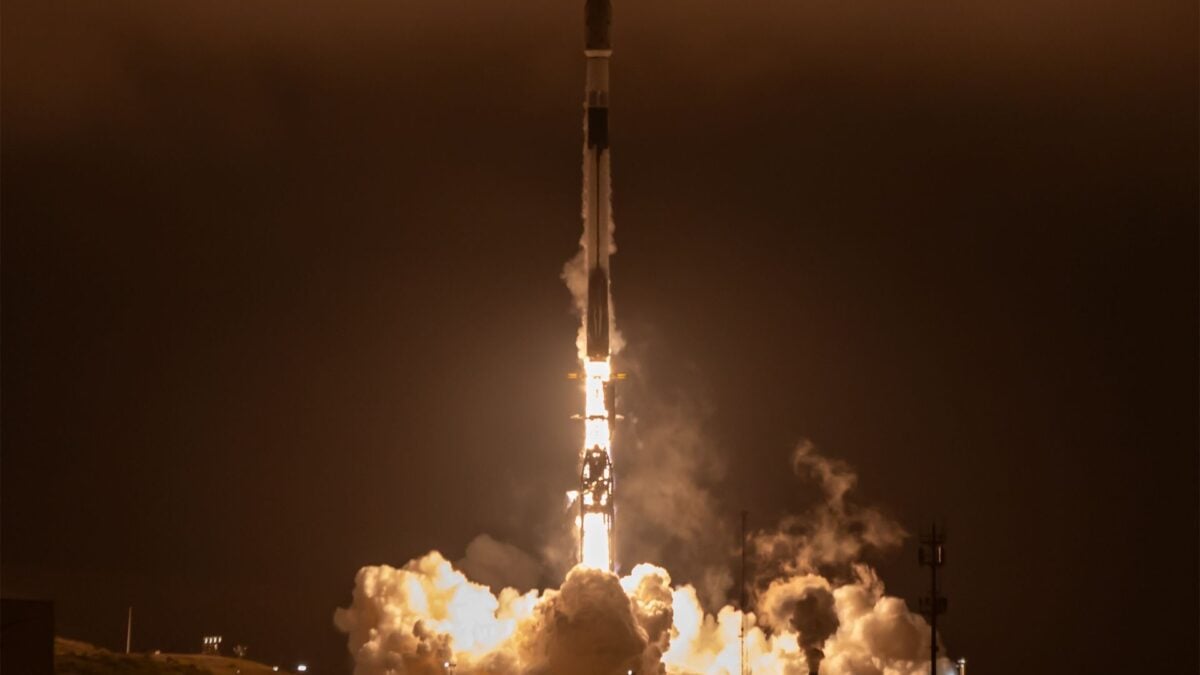
Commercial Spaceflight Embraces Nuclear Power with Historic Satellite Launch
The commercial spaceflight industry has taken a significant leap into a new era with the successful launch of the first commercial nuclear-powered satellite prototype. This development addresses a critical limitation faced by the vast majority of satellites, which currently rely on solar arrays and batteries. These traditional power sources are hampered by the intermittent availability of sunlight and the rapid degradation of batteries, impacting the reliability and duration of satellite operations.
A Florida-based company, City Labs, has introduced a groundbreaking solution: equipping satellites with compact nuclear power sources. Their Betavoltaic Orbital High-Reliability (BOHR) satellite, a small cubesat, was among the 81 satellites launched on SpaceX's Transporter-17 rideshare mission. The BOHR satellite is designed to test City Labs' proprietary NanoTritium betavoltaic technology in orbit, marking a historic first for commercial nuclear power in space.
Peter Cabauy, CEO of City Labs, stated that the BOHR mission demonstrates the readiness of safe, compact, and regulatory-approved nuclear power systems for routine commercial deployment. This advancement promises persistent, always-on payload operations that are no longer constrained by sunlight or battery life.
The core of City Labs' technology lies in betavoltaics, which harness the energy released from the natural decay of tritium, a radioactive isotope of hydrogen. As tritium decays, it emits beta particles that are converted directly into electrical power using a semiconductor. Unlike conventional batteries, betavoltaic systems continuously generate low-level power, making them ideal for applications requiring long-duration, reliable operation without the need for charging or frequent maintenance.
While the BOHR satellite is equipped with the NanoTritium technology, its primary power source for general operations remains solar. The betavoltaic system is specifically powering and validating a payload demonstration, aiming to prove its capability to sustain an instrument's operation in the absence of solar power.
The success of this mission is poised to be a major step towards the commercial deployment of nuclear power systems for spacecraft, offering both technical validation and a crucial regulatory precedent. City Labs' BOHR spacecraft is the first commercial nuclear mission to successfully navigate the Federal Aviation Administration's pathway for nuclear launch approval, having received authorization in September 2025. This paves the way for future commercial nuclear space missions.
Cabauy emphasized that the innovation extends beyond the technology itself, highlighting the significance of the regulatory advancements. While nuclear power has been utilized in space for decades by government agencies like NASA, its commercial scaling requires a streamlined regulatory framework, which City Labs has now helped establish.
It is important to note that nuclear-powered spacecraft are not a new concept. NASA's Mars rovers, Perseverance and Curiosity, as well as its Voyager probes and New Horizons spacecraft, all utilize plutonium-based radioisotope thermoelectric generators.
City Labs' long-term vision is to deploy its NanoTritium technology beyond low Earth orbit. If successful, this system could enable spacecraft capable of extended operations in environments where sunlight is scarce, such as the Moon's shadowed polar regions. This technology could potentially power lunar infrastructure and transportation systems, addressing emerging needs as humanity expands its presence in space. The BOHR mission signifies a pivotal moment, indicating that as space exploration progresses, solar-based power systems will increasingly require supplementation by more robust and persistent power solutions.
BNN's Perspective: The successful launch of the BOHR satellite represents a significant and logical progression for the commercial space industry. While solar power has served us well, its inherent limitations are becoming increasingly apparent as missions venture further and require more consistent power. The development of a safe, commercially viable nuclear power source, validated through a rigorous regulatory process, opens up exciting new possibilities for sustained operations in challenging environments. This innovation, while still in its early stages, holds the potential to unlock new frontiers in space exploration and utilization, offering a balanced approach to powering our future endeavors beyond Earth.
Tags: commercial spaceflight, nuclear power, satellite, solar arrays, batteries, betavoltaic, tritium, NanoTritium, BOHR, City Labs, SpaceX, Transporter-17, cubesat, payload, Federal Aviation Administration, FAA, regulatory approval, Moon, lunar, space exploration