Chip Selloff Deepens After Google Touts Memory Breakthrough
3 minute readPublished: Thursday, March 26, 2026 at 2:00 pm
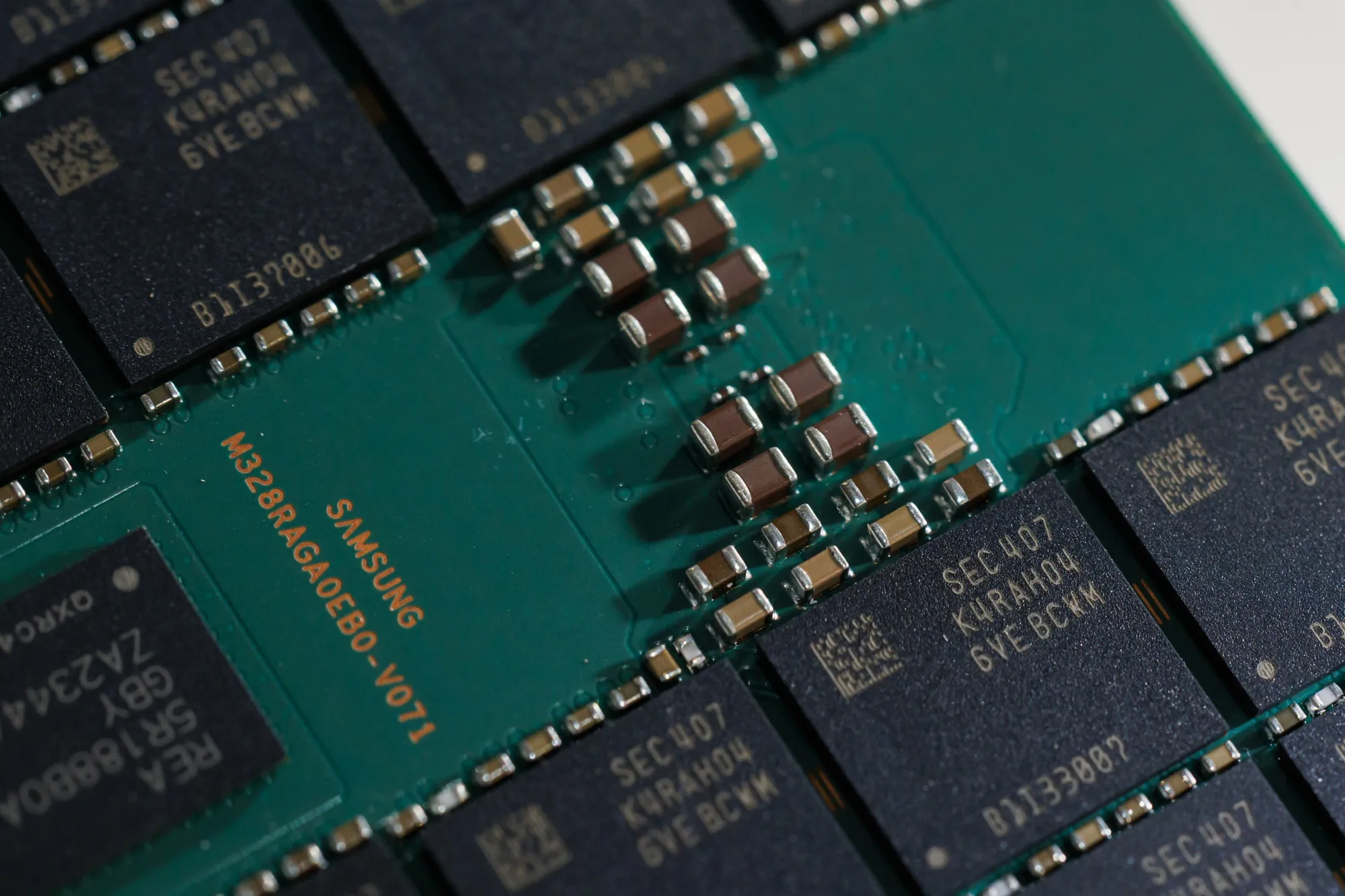
Chip Stocks Plunge Following Google AI Breakthrough
Memory chip stocks experienced a significant downturn on Thursday, triggered by Google's announcement of a new algorithm designed to enhance the efficiency of memory usage in artificial intelligence development. The algorithm, dubbed TurboQuant, promises to drastically reduce the memory requirements for running large language models, potentially impacting the demand for memory chips.
Leading South Korean chip manufacturers, Samsung Electronics and SK Hynix, saw their shares decline by at least 6% in Seoul trading. In the United States, Micron Technology, Western Digital, and Sandisk also faced substantial losses, with declines of at least 5%. This selloff comes after a period of strong performance for memory chip companies, fueled by surging investment in AI infrastructure and resulting shortages that drove up prices and profits.
Google's research, initially published last year but publicized this week, suggests that TurboQuant can reduce memory needs by a factor of six, potentially lowering the overall cost of AI training. This development has raised concerns among investors about a potential decrease in demand from hyperscalers, companies that are major consumers of memory chips for their data centers. These hyperscalers, including Amazon and Google, are projected to spend approximately $650 billion this year on data center construction.
While some analysts express concerns about the impact on chip prices, others believe the long-term implications are more positive. Morgan Stanley analyst Shawn Kim suggests that the algorithm's efficiency gains could ultimately benefit the industry by improving the cost-effectiveness of AI deployment. He, like others, referenced the Jevons Paradox, which posits that increased efficiency can lead to greater demand. JPMorgan Chase & Co. analysts also noted that while investors may take profits, there is no immediate threat to memory consumption.
BNN's Perspective: The market's reaction highlights the complex interplay between technological advancements and investor sentiment. While Google's innovation could initially lead to price corrections, the long-term impact on the memory chip market remains uncertain. The potential for increased AI deployment, driven by lower costs, could ultimately offset any short-term demand reduction. Investors should carefully consider the evolving dynamics of the AI landscape and the potential for both challenges and opportunities within the memory chip sector.
Tags: memory chip stocks, Google, TurboQuant, AI, algorithm, Samsung Electronics, SK Hynix, Micron Technology, Western Digital, Sandisk, hyperscalers, data centers, Jevons Paradox, AI infrastructure, memory consumption, chip prices, artificial intelligence