Big battleships wont beat China
3 minute readPublished: Monday, December 29, 2025 at 10:00 am
U.S. Defense Department Acknowledges China as Primary Military Challenge
The U.S. Department of Defense, under the leadership of War Secretary Pete Hegseth, has identified China as the Pentagon's primary military challenge. This assessment stems from China's rapid military development across all domains of warfare, including ground, naval, air, and space. The core strategic objective of China's military buildup is to conquer Taiwan and deter any U.S. intervention.
China's military capabilities are substantial. It boasts the world's largest navy, a significant ballistic missile force, a large air force with advanced stealth aircraft, and plans for a vast satellite and anti-satellite system in space. These forces include impressive assets like the Type-055 air defense cruiser and the Dongfeng carrier-killer ballistic missiles.
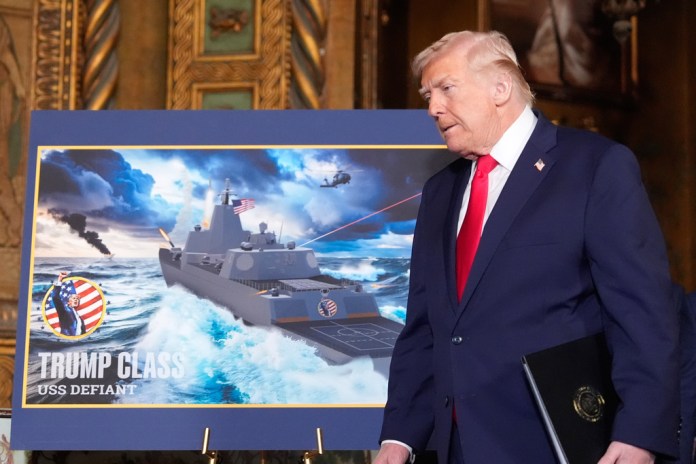
The U.S. response requires a shift in strategy. The current focus on large battleships, such as the proposed Trump-class, is deemed inadequate. The text suggests that victory against China requires more than just the ability to inflict damage; it also necessitates the ability to survive sustained attacks. This includes withstanding strikes from Chinese satellites, ballistic missiles, and aircraft operating from nearby mainland bases.
The geographical realities of a potential conflict around Taiwan favor China. U.S. forces would likely be outnumbered and operating from more distant bases. The article argues that large battleships, while potentially prestigious, would be easier targets and would exacerbate existing problems within the U.S. Navy's shipbuilding program, which is already facing delays and cost overruns.
Instead, the article advocates for a strategy that emphasizes smaller, more numerous, and survivable warships. This includes deploying unmanned drone ships and phantom ships, accelerating the production and deployment of destroyers and attack submarines, and leveraging the shipbuilding capabilities of allies like South Korea. The article also suggests adopting tactics like deploying missile and radar systems on cargo ships.
BNN's Perspective:
The analysis presents a pragmatic assessment of the evolving military landscape. While the desire for a strong naval presence is understandable, the focus on large battleships appears to be a costly and potentially ineffective approach. A more agile and adaptable strategy, prioritizing survivability and leveraging technological advancements, seems to be a more prudent path forward. This approach aligns with the need to maintain a credible deterrent while acknowledging the realities of a potential conflict with China.
Keywords: China, military, defense, Taiwan, warships, battleships, strategy, Navy, missiles, aircraft, technology, Indo-Pacific, shipbuilding, drones, submarines, conflict, Pentagon, Hegseth, Trump-class, Type-055, Dongfeng, allies