Air Liquide Launches World First Industrial Ammonia to Hydrogen Unit
3 minute readPublished: Tuesday, November 25, 2025 at 1:17 pm
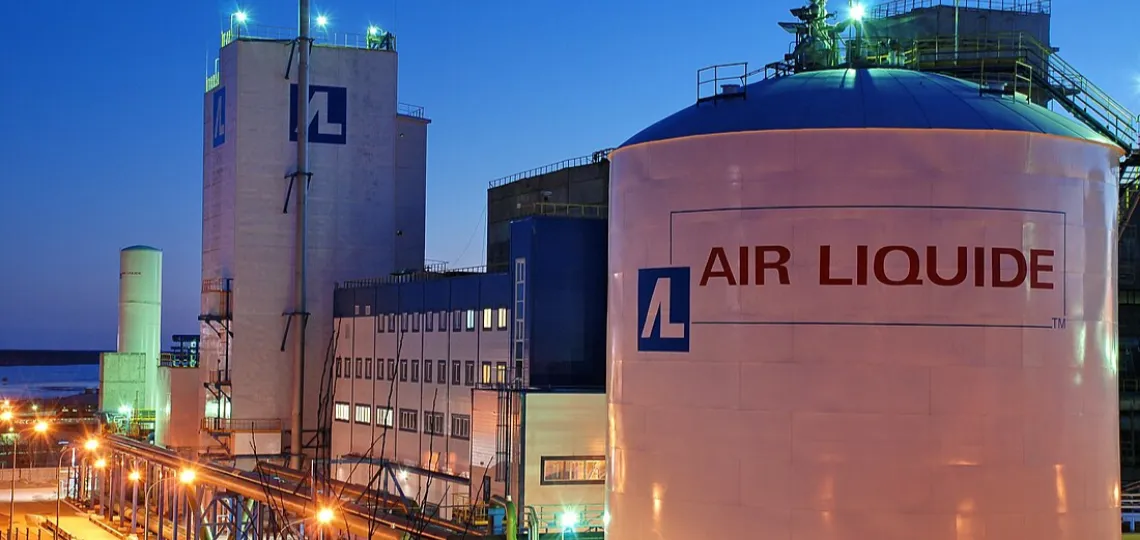
Air Liquide Unveils World's First Industrial Ammonia-to-Hydrogen Unit
Air Liquide has launched the world's first industrial-scale ammonia-to-hydrogen cracking unit, a 30-ton-per-day facility designed to convert ammonia back into hydrogen with commercial efficiency. This groundbreaking technology, located at the port of Antwerp-Bruges, marks a significant advancement in the development of global hydrogen supply chains.
The unit addresses a critical challenge in the hydrogen economy: the efficient transportation of hydrogen over long distances. Ammonia, a compound of hydrogen and nitrogen, is seen as a promising carrier due to its existing global infrastructure for production and shipping. Air Liquide's technology allows for the conversion of ammonia back into hydrogen near demand centers, potentially bridging the gap between renewable hydrogen production in resource-rich regions and consumption in Europe and Asia.
The company's innovation includes advanced catalysis systems, enhanced combustion design, refined materials testing, upgraded process safety, and high-purity molecule separation. This breakthrough is expected to pave the way for gigawatt-scale cracking plants, enabling the import of low-carbon hydrogen from regions like the Middle East, Australia, Latin America, and Africa.
The project has garnered significant attention from industry stakeholders, including major utilities, chemical companies, and steelmakers, who are closely monitoring its potential to validate ammonia-based supply routes. The technology is also expected to lower uncertainty for investors and could support the expansion of renewable hydrogen certification frameworks. This could accelerate the development of a global, fungible hydrogen market, similar to the existing LNG market.
BNN's Perspective: This development is a positive step towards a more diversified and secure energy future. While the technology is promising, its widespread adoption will depend on continued investment and supportive policy frameworks. The ability to efficiently transport and convert hydrogen is crucial for achieving global net-zero targets, and this innovation could play a key role in accelerating the energy transition.
Keywords: Air Liquide, ammonia, hydrogen, cracking unit, Antwerp-Bruges, energy transition, low-carbon hydrogen, renewable hydrogen, supply chain, decarbonization, industrial scale, hydrogen economy, global trade, energy security, investment, net-zero, fungible hydrogen, hydrogen market