A first among major nations, India is industrializing with solar
3 minute readPublished: Saturday, May 30, 2026 at 1:00 pm
India's Solar Surge: A New Era of Industrialization
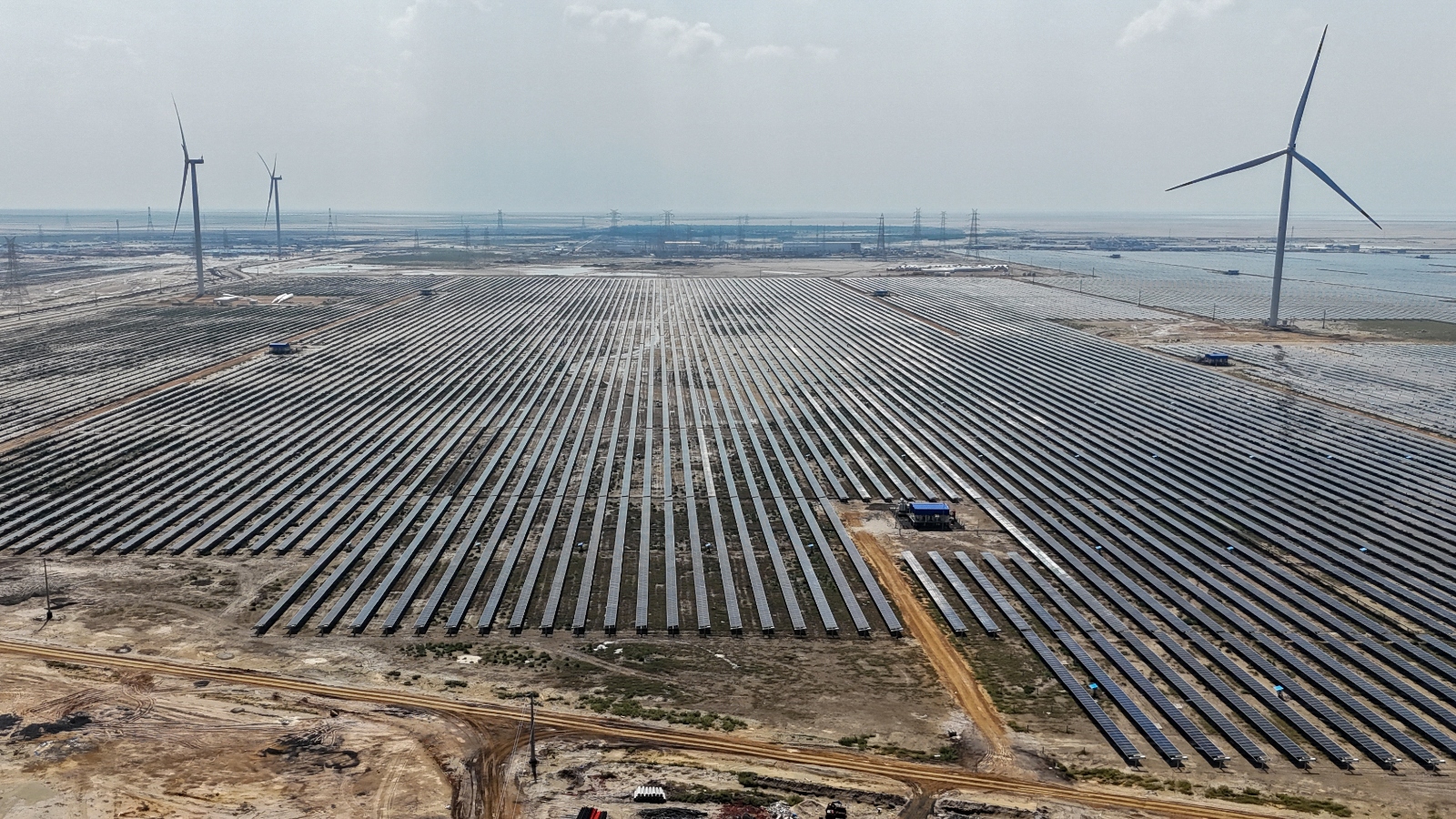
India is rapidly transforming its energy landscape, leading the charge in solar-powered industrialization. The nation is on track to become the first major country to predominantly power its industrial growth with solar energy. This shift is exemplified by the Khavda solar park, poised to be the world's largest solar facility, with a massive 30-gigawatt capacity.
India's solar capacity has been growing at an impressive 40% annually, surpassing 150 gigawatts and projected to double again by 2030. This rapid expansion is fueled by falling solar panel costs and the country's abundant sunshine. The government is investing heavily in expanding the national grid to accommodate the surge in solar power.
The transition, however, faces challenges. India's outdated grid struggles to transmit all the generated solar power, and the country lacks sufficient energy storage infrastructure. To address this, India is exploring pumped storage and lithium-ion batteries. The nation also relies heavily on China for the technology behind its solar push.
Despite these hurdles, the solar revolution is gaining momentum. The government is working to boost domestic manufacturing to reduce reliance on China. The country is also electrifying its transportation sector, with electric rickshaws leading the way.
While coal remains a significant part of India's energy mix, its share is expected to decline. The country aims to complete its transition into a modern industrial economy by 2047.
BNN's Perspective: India's commitment to solar energy is a bold move with the potential to reshape the global energy landscape. While challenges remain, the country's progress offers a promising model for other emerging economies seeking sustainable industrialization.
Tags: India, solar energy, renewable energy, Khavda solar park, energy transition, grid expansion, energy storage, electric vehicles, coal, sustainable development, climate change, Adani Group, industrialization, solar power, solar panels